
What 3D Printing Type Is Right For Your Project?
Before deciding on what printing option is best, first, let’s look at what the options are and then the pros and cons of each type. Armed with this information you will be able to determine the best option for your project!
What Printing Types Are There?
3D printing is everywhere, from medical research and devices, industrial applications, dental, art, gaming - the list goes on! There are so many options that categorisation was needed! There are seven core categories of 3D printing as described by ASTM International (American Society for Testing and Materials) and ISO (International Organization for Standardization). Click on the links below to learn more about each print type!
Material Extrusion (FDM/FFF) - Material (usually a thermoplastic filament) is melted and pushed through a heated nozzle, building an object layer by layer.
Vat Photopolymerization (SLA/DLP) - A liquid photopolymer resin in a vat is selectively cured (hardened) layer by layer using a light source like a UV laser or projector.
Powder Bed Fusion (PBF/SLS) - A thermal energy source selectively melts or sinters powder particles spread across a bed to fuse them into a solid cross-section.
Material Jetting (MJP) - A print head dispenses droplets of material (usually liquid photopolymer or wax) onto a build platform where they are instantly cured layer by layer by light.
Binder Jetting - A liquid binding agent is selectively jetted onto a bed of powder material, gluing the powder together to form solid layers. Includes plater based printing.
Directed Energy Deposition (EBM/LMD) - Material (usually metal powder or wire) is melted by a high-energy beam (such as a laser or electron beam) as it is being deposited by a nozzle.
Sheet Lamination (LOM) - Sheets of material (like paper, metal foils, or plastic) are stacked and bonded together, typically using ultrasonic welding or adhesive, and then cut into shape using lasers.
The most commonly used options are FDM, SLA and SLS. Since Adrah Labs offers both FDM and SLA printing options, we will focus on those in this post.
FDM & SLA Printing
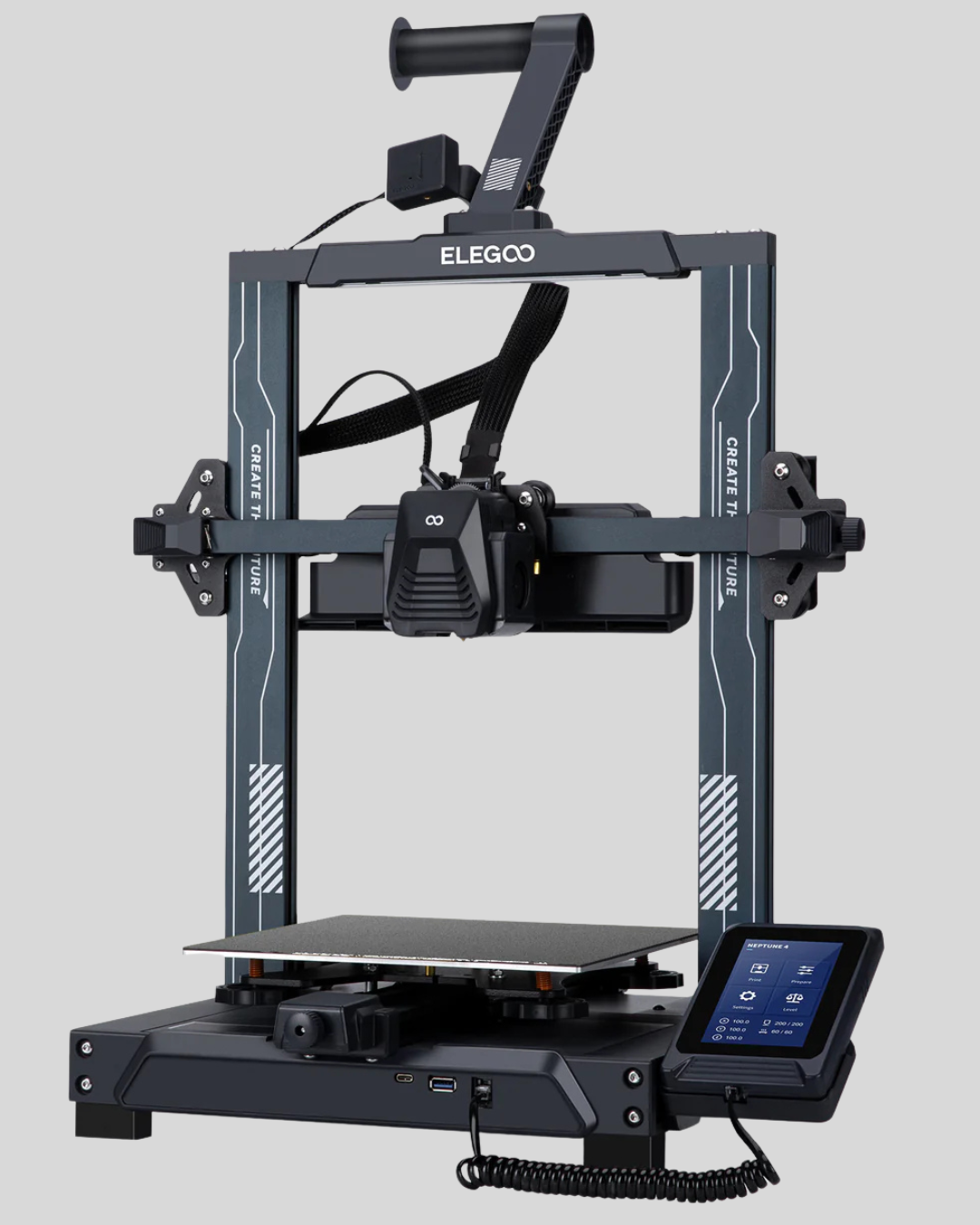
What is FDM (filament) printing?
FDM stands for Fused Deposition Modelling. This type of printing builds the print in layers by extruding melted filament such as PLA. It is often used for fast prototyping, larger models and articulated toys. There is minimal post processing/cleaning required compared to SLA printing.
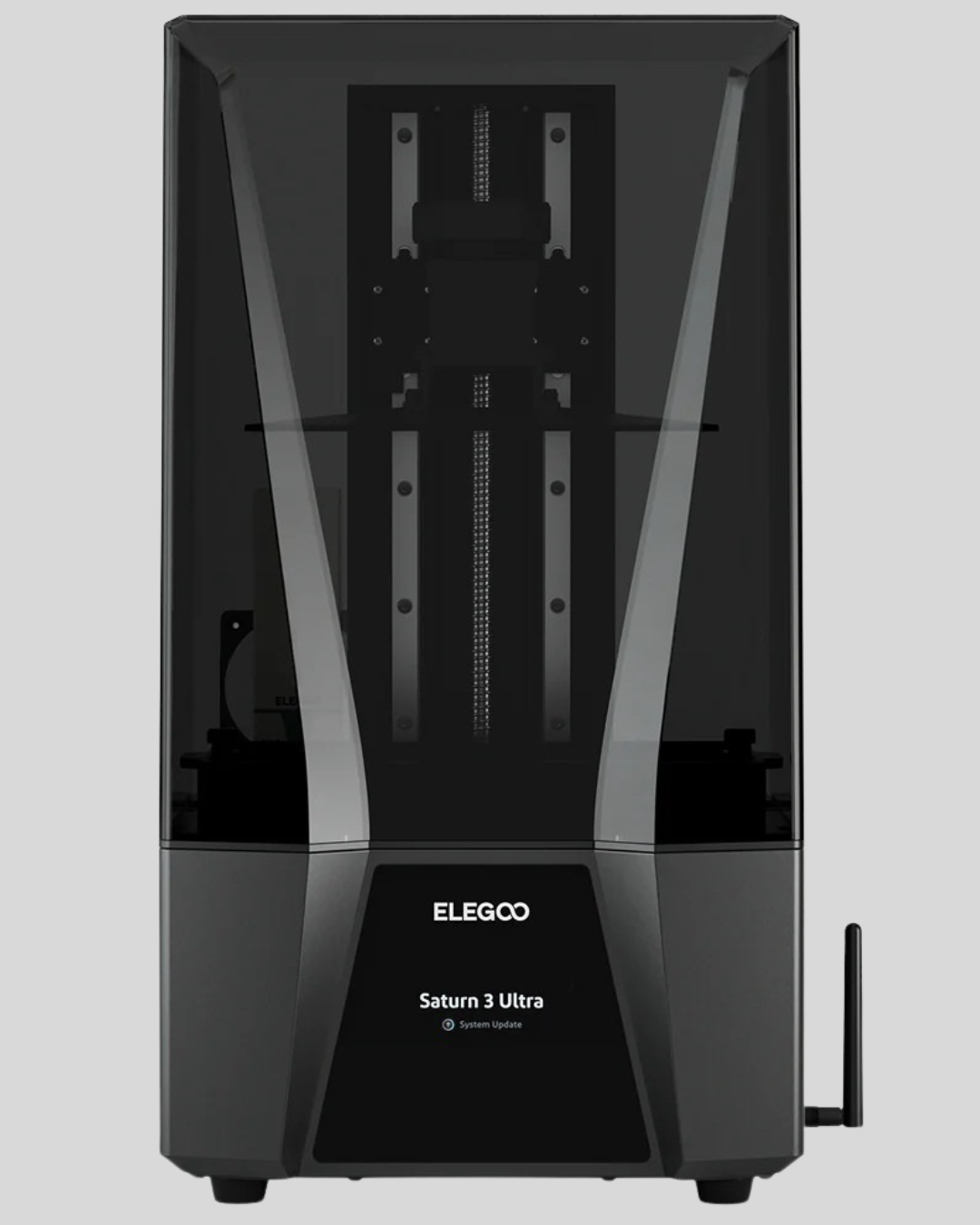
What is SLA (Resin) printing?
SLA stands for Stereolithography. To make it confusing, this is also the term used to describe the file type STL! This method is also know as vat photopolymerisation. This method uses a UV light to cure photopolymer resin into a solid, layer by layer. Due to the accuracy of this type of printing, it is often used for jewellery casting and dental models.
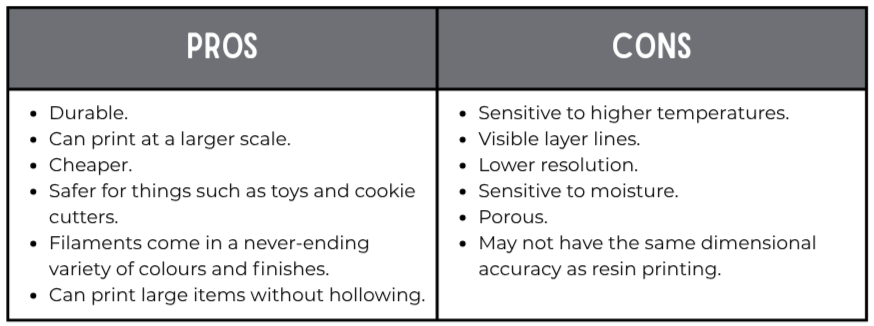
What are the Pros and Cons?
FDM (Filament) Printing
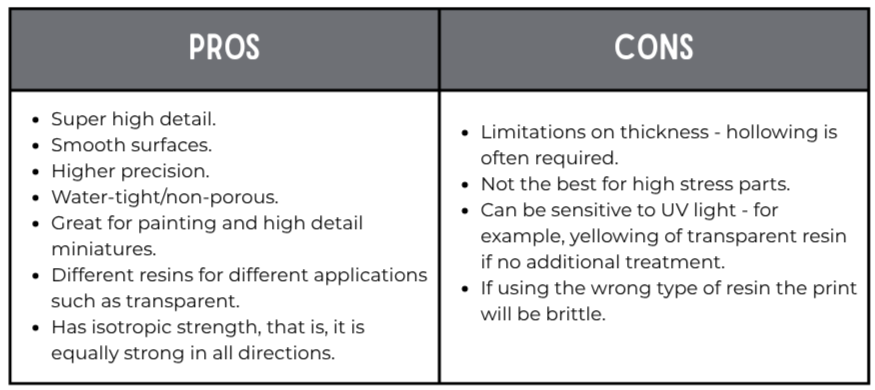
Resin Printing
Still unsure of what printing is right for your project, and looking for someone to print them for you? We’re here to help! Reach out to us via email, or via the form on the Custom Print page.
